The Relevance of Fact-Checking worldwide of News Online
The frequency of misinformation in today's on the internet news landscape has reached worrying degrees. Fact-checking organizations play a necessary function in counteracting this trend. They verify cases and enhance the credibility of journalism. Nonetheless, the effectiveness of these organizations frequently depends upon their techniques and public perception. As audiences navigate this complicated atmosphere, the effects of their findings might shape the future of news intake and trust. What does this mean for the integrity of details moving on?

The Increase of Misinformation in the Digital Age
Just how has the arrival of digital technology added to the spread of misinformation? The rapid growth of the internet and social media sites systems has assisted in the circulation of information at an unprecedented rate. Users can share write-ups, videos, and viewpoints with a plain click, often without validating the material's accuracy. Algorithms focus on mind-blowing or mentally billed material, resulting in an expansion of misleading stories that catch attention.
Furthermore, the privacy afforded by digital platforms allows individuals to spread incorrect info without liability (stnews.live). Misinformation prospers in resemble chambers, where individuals are revealed mostly to viewpoints that enhance their beliefs, additionally setting fallacies. The saturation of information can overwhelm users, making it challenging to recognize qualified resources from unstable ones. As a result, false information has come to be a pervasive concern in the electronic landscape, affecting popular opinion and count on reputable news resources
The Role of Fact-Checking Organizations
Fact-checking organizations play an important function in improving the credibility of journalism by validating insurance claims made in news records. Their efforts are important in combating false information, guaranteeing that precise information dominates in the electronic landscape. By holding media outlets liable, these companies contribute substantially to educated public discourse.
Enhancing Reputation in Journalism
While misinformation proliferates in the electronic age, fact-checking companies play a vital function in improving the trustworthiness of journalism. These companies thoroughly verify insurance claims made in news short articles, public statements, and social media sites blog posts, making sure that information distributed to the general public is exact and trustworthy. By providing independent assessments, they function as a vital source for reporters, helping them keep high requirements of integrity. Additionally, their efforts advertise transparency in media, cultivating public depend on. As audiences become increasingly critical, the presence of reputable fact-checking entities can distinguish trustworthy news resources from those that may spread fallacies. Inevitably, the dedication of fact-checking companies to support reliability is critical for the health and wellness of autonomous discourse.
Combating False Information Efficiently
As misinformation remains to spread out swiftly across digital systems, the function of fact-checking organizations comes to be progressively essential in the battle for accurate information. These organizations work as guard dogs, inspecting insurance claims made by somebodies and media electrical outlets to guarantee accountability. By employing rigorous research methods and expert evaluation, they validate truths and make clear deceptive narratives. Their findings are distributed with different networks, educating the general public and cultivating critical reasoning. Furthermore, collaborations with social media systems improve their reach, enabling punctual flagging of incorrect details. As digital proficiency grows, the influence of fact-checking organizations is vital in empowering target markets to determine fact from fraud, ultimately contributing to an extra educated culture.
Exactly How Misinformation Affects Public Perception
Misinformation substantially undermines trust in media, leading audiences to wonder about the trustworthiness of news resources. Consequently, individuals usually gravitate in the direction of outlets that reinforce their current beliefs, adding to the polarization of opinions. This vibrant creates a fragmented information landscape, where shared recognizing ends up being progressively challenging to achieve.
Count on Media

Count on media has ended up being significantly vulnerable in the digital age, where the fast spread of incorrect details can skew public perception. As false information multiplies across social networks and on-line systems, audiences commonly discover it testing to discern reputable resources from unreliable ones. This unpredictability cultivates hesitation, leading many people to examine the motives behind news reporting. Trust in developed media electrical outlets has actually lessened, as customers increasingly turn to different sources that might lack strenuous content standards. This disintegration of trust not just impacts specific ideas but additionally threatens the collective capacity to participate in educated discussions. Inevitably, the stability of journalism goes to risk, highlighting the important demand for efficient fact-checking to recover self-confidence in the media landscape.
Polarization of Opinions
The increasing hesitation towards conventional media has actually added to an expanding polarization of opinions among the general public. False information, often shared through social media sites and on the internet platforms, plays a significant function in forming distinct ideological separates. People regularly seek information that lines up with their pre-existing ideas, reinforcing their viewpoints while disregarding opposing perspectives. This resemble chamber result heightens divisions, leading to a fragmented public discourse where agreement comes to be progressively evasive. Additionally, sensationalized narratives flourish in this setting, additionally skewing public perception and promoting mistrust in legitimate sources. As polarization intensifies, the need for reliable fact-checking ends up being extremely important to bridge voids and advertise informed conversations, eventually ensuring a more cohesive culture qualified of navigating intricate problems.
Methods for Efficient Fact-Checking
Effective fact-checking depends on a methodical strategy that consists of thorough research, confirmation of resources, and crucial evaluation of claims. A fundamental technique is cross-referencing information from multiple credible sources to confirm its precision. Fact-checkers frequently utilize specialized databases and archives to trace the click this origin of specific declarations, guaranteeing that the reported information straightens with recorded proof.
Another important method entails scrutinizing the context in which cases are offered. Misleading information can emerge from out-of-context quotes or careful information use. By analyzing the more comprehensive story, fact-checkers can determine possible predispositions or misconceptions.
Involving with specialists in pertinent fields can offer quality and understanding that improves the fact-checking procedure. This collaboration can discover subtleties that laypeople might overlook - stnews.live. Eventually, a regimented approach incorporating these methods cultivates a more enlightened public, improving the integrity of info shared in the digital age
The Influence of Social Network on News Intake
How has social media changed the way people take in news? The introduction of platforms like Facebook, Twitter, and Instagram has especially altered news consumption patterns. News is currently distributed rapidly, permitting users to gain access to real-time updates and involve with web content with sort, shares, and comments. This immediacy has promoted a choice for bite-sized info, often at the cost of thorough evaluation.
Social media enables personalized news feeds, where algorithms curate web content based on user choices, creating echo chambers that might restrict exposure to diverse perspectives. The function of conventional news electrical outlets has reduced as individuals significantly count on peer suggestions and trending topics. Subsequently, the trustworthiness of information is frequently compromised, as sensationalism can outweigh valid coverage. Generally, social networks has improved news intake, emphasizing rate and customization while challenging the standards of journalistic integrity.
Encouraging Target Markets to Identify Dependable Resources
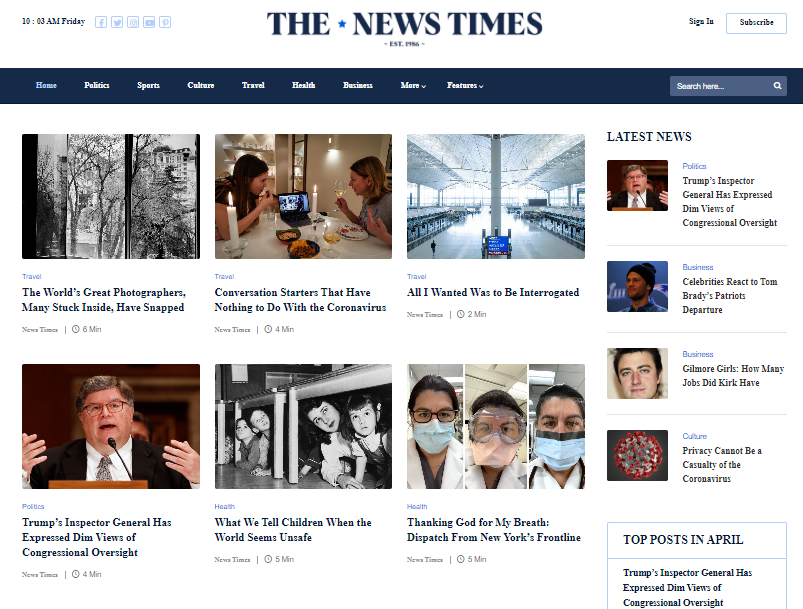
Additionally, checking out the authorship and business history of news posts can disclose potential prejudices. Cross-referencing details across numerous reliable electrical outlets further improves the confirmation procedure. Using electronic tools, such as browser expansions that rank the reputation of sites, can additionally assist in determining credible information. By actively engaging with these resources and growing a critical mindset, audiences can better outfit themselves to discern trusted news resources, inevitably promoting a much more informed society in the middle of the complexities these days's media setting.
The Future of Journalism and Fact-Checking
As the media landscape develops, the future of journalism and fact-checking deals with both tests and chances. The increase of digital systems has this actually democratized information dissemination, enabling diverse voices to arise. This has actually likewise led to the spreading of false information, demanding robust fact-checking systems. Reporters will significantly depend on modern technology, including AI tools, to confirm realities rapidly and effectively.
Cooperation in between news companies and fact-checking entities is anticipated to strengthen integrity and openness. In addition, audience engagement will certainly play a crucial duty, as educated readers come to be considerable companions in identifying trustworthy material.
The demand for responsibility and precision is likely to grow, pressing journalists to support high criteria in their coverage. Ultimately, the future of journalism might depend upon its ability to adapt to technological innovations while preserving journalistic integrity, ensuring that fact-checking continues to be a cornerstone of trustworthy news.
Often Asked Questions
Exactly How Can I Report False Information I Experience Online?
To report false information encountered online, individuals can use platform-specific coverage devices, give clear proof, and share the info with fact-checking organizations. Involving with area conversations can also assist raise understanding regarding the false information.
What Prevail Signs of Misinformation in News Articles?
Typical signs of false information in newspaper article include astonishing headings, absence of credible resources, emotional language, inconsistent facts, and absence of writer credentials. Viewers should critically assess content for these indicators to recognize precision.
How Do Fact-Checkers Confirm Resources?
Fact-checkers verify sources by cross-referencing details with reputable data sources, speaking with experts, and checking out the initial context of cases. They additionally analyze the dependability of the resources, guaranteeing precise and trustworthy details for public intake.
What Lawsuits Can Be Taken Versus False information?
Lawsuits versus misinformation might consist of defamation suits, cease-and-desist orders, and regulatory fines. Targets can look for redress via civil courts, while some territories impose fines or assents on systems distributing false details.
Exist Apps for Fact-Checking News On-The-Go?
Numerous apps exist for fact-checking news on-the-go, consisting of Snopes, FactCheck.org, and PolitiFact. These applications assist individuals verify insurance claims quickly, advertising notified decision-making and cultivating a much more discerning strategy to consuming news in real-time.
Comments on “How to Use stnews.live Across Devices”